
 Save
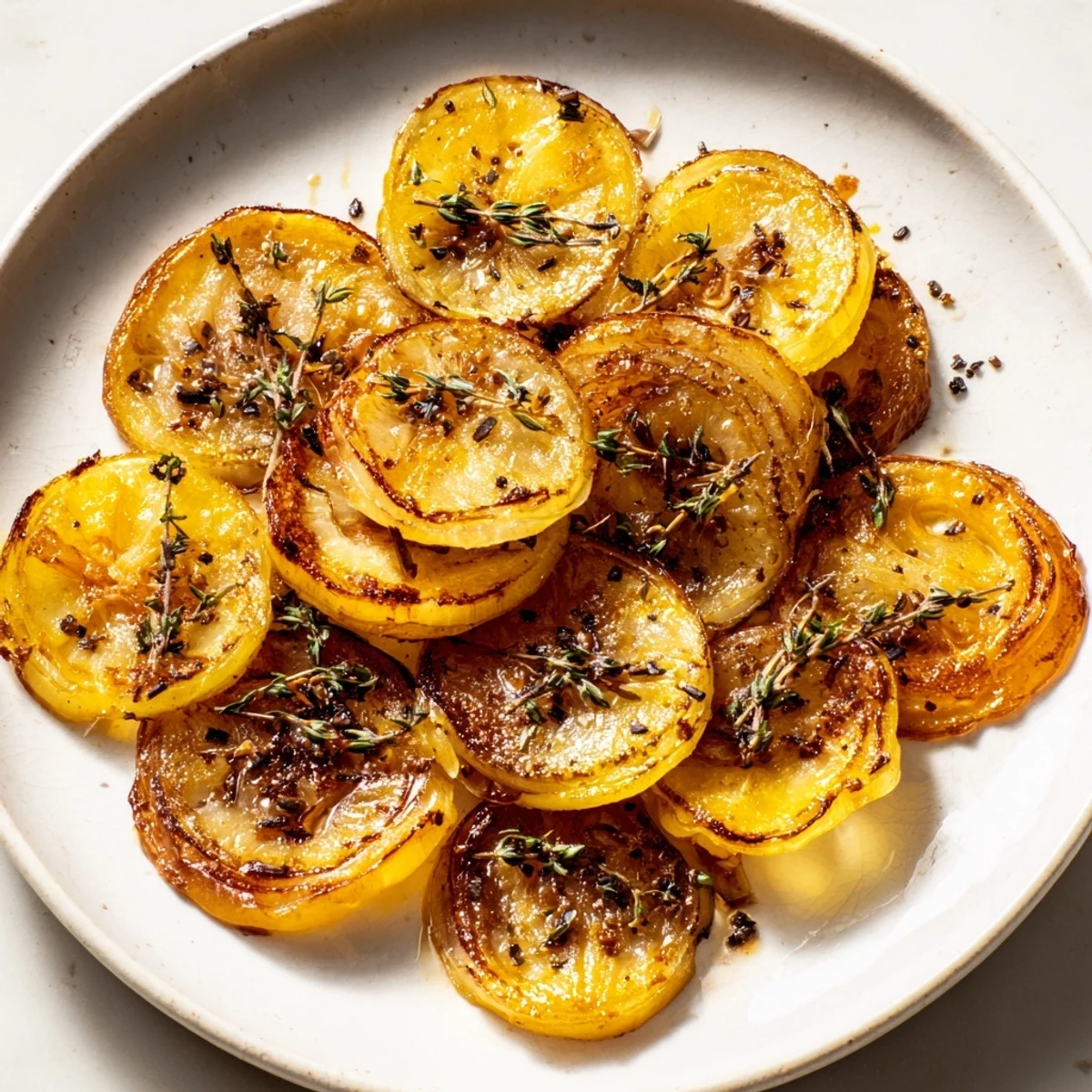
Save This dish features thickly sliced yellow onions roasted until golden and caramelized, imparting a deep, savory flavor. Olive oil and butter create a luscious texture while thyme and optional balsamic vinegar add fragrant, tangy notes. Simple to prepare, these roasted onions serve perfectly as a side or a flavorful topping for grilled meats and grains. For a vegan twist, omit butter and rely on olive oil alone.
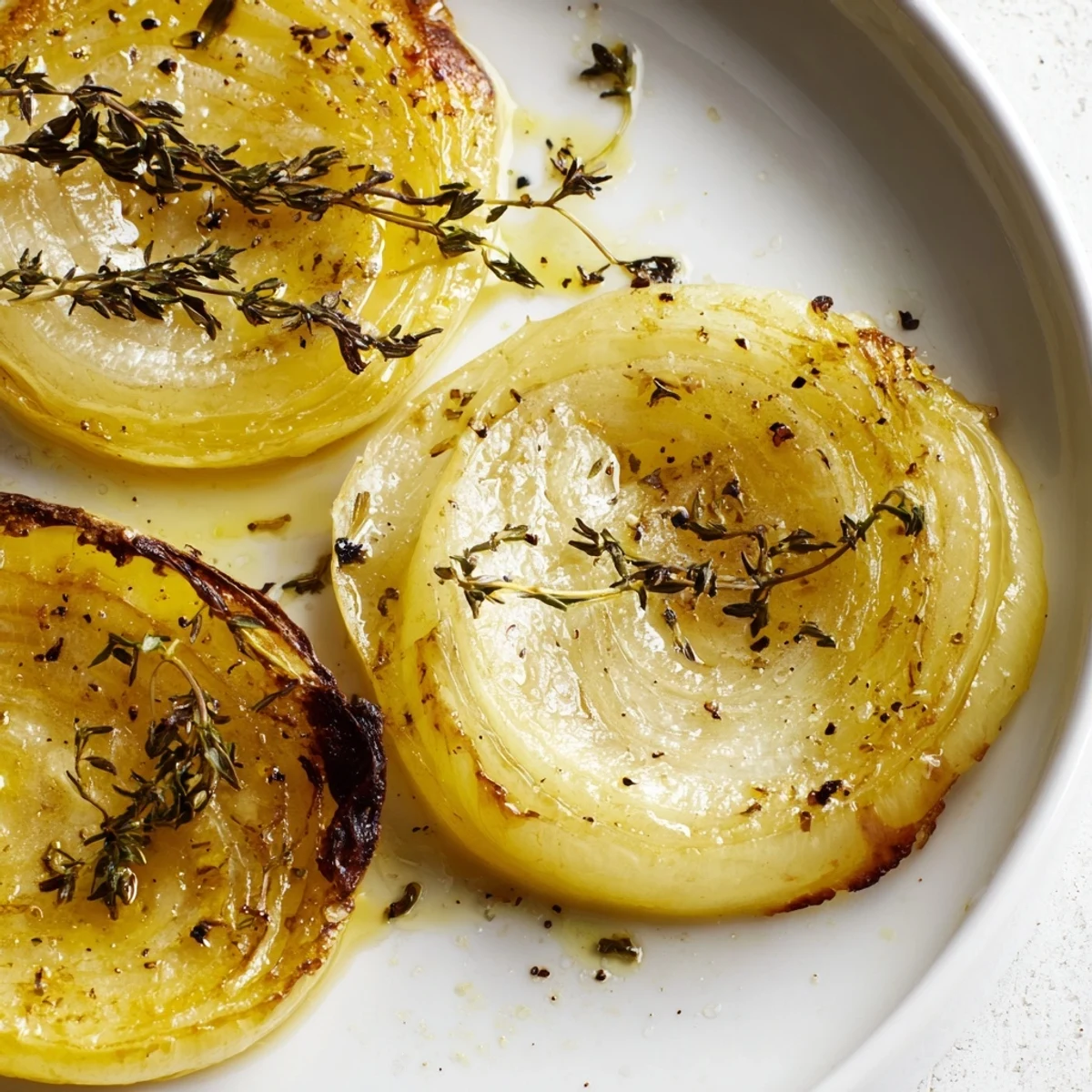
Roasting at 400°F for 30-35 minutes ensures a tender yet slightly crisp texture, with caramelized edges offering complexity. Seasoned with kosher salt, black pepper, and fresh thyme, this side balances savory and herbaceous flavors that enrich any meal. Versatile and tasty, it elevates everyday dishes with minimal effort.
I discovered the magic of roasted onions on a rainy Tuesday when my neighbor dropped off a basket of gorgeous yellow onions from her garden. Instead of the usual caramelized onion soup, I decided to roast them whole and sliced—the way the oven transforms them into something almost candied, with edges that turn bronze and char. That first bite changed how I thought about onions entirely.
I made this for a casual dinner party once, and my friend who swears he doesn't like onions went back for thirds. He was shocked when I told him what he'd been eating, and now it's become his go-to potluck dish. There's something about roasting that mellows the bite and coaxes out a sweetness that even skeptics can't resist.
Ingredients
- 4 large yellow onions: Yellow onions have enough natural sugar to caramelize beautifully; slice them into 1/2-inch rounds so they stay intact but cook evenly.
- 2 tablespoons olive oil: Use a decent quality oil—it won't burn at 400°F and carries the flavor of everything else.
- 1 tablespoon unsalted butter: This adds richness and helps with that golden-brown edge; skip it for vegan, or use refined coconut oil instead.
- 1 teaspoon kosher salt: Season generously; onions need it to shine.
- 1/2 teaspoon freshly ground black pepper: Freshly ground makes all the difference—pre-ground tastes dusty by comparison.
- 1 teaspoon fresh thyme leaves: If using dried, halve the amount; dried herbs concentrate as they sit.
- 1 teaspoon balsamic vinegar: Optional but worth it—adds a whisper of tangy depth in the final minutes.
Instructions
- Heat your oven:
- Set it to 400°F (200°C) and let it fully preheat while you prep. You want that oven ready so the onions start caramelizing immediately.
- Prep your pan:
- Line a large baking sheet with parchment paper or give it a light grease. Parchment makes cleanup effortless and prevents sticking.
- Slice and arrange:
- Cut your onions into 1/2-inch rounds—keep them intact so they hold their shape while roasting. Lay them flat in a single layer; crowding means steam, not caramelization.
- Dress the onions:
- Drizzle olive oil and melted butter evenly over everything, then sprinkle salt, pepper, and thyme. Use your fingers to gently make sure every slice gets coated.
- Roast and flip:
- Slide into the oven for about 17 minutes, then flip each slice carefully—you want both sides to catch color. Another 13-18 minutes and the edges should be golden brown and caramelized.
- Finish strong:
- If using balsamic, drizzle it over the onions during the final 5 minutes. This prevents the vinegar from cooking off and lets it add its tangy character.
 Save
Save I'll never forget watching my five-year-old niece try these for the first time—she was convinced onions were always bitter, so I warned her these were different. She ate half the tray and asked for the recipe to teach her mom. It was a small moment, but it reminded me how cooking can shift someone's mind about an ingredient they thought they knew.
Flavor Layering Secrets
The real trick isn't just roasting; it's understanding that onions contain natural sugars that caramelize under dry heat. When you combine that with butter and thyme, you're creating layers of flavor that build as the onions cook down. The balsamic at the end? That's your final flourish—it adds complexity without overwhelming the dish's gentle sweetness.
When to Serve These
I've tucked these onto a burger, spooned them over grilled steak, stirred them into creamy polenta, and even tossed them with grain bowls. They work warm straight from the oven or at room temperature, which makes them perfect for meal prep or a make-ahead side dish. The flavor actually deepens as they sit, so don't hesitate to make them a few hours early.
Variations Worth Trying
Once you master the basic roast, you can play. I've added a pinch of smoked paprika for smokiness, scattered fresh rosemary instead of thyme for an herbal twist, and even sprinkled crispy sage on top just before serving. The foundation is so solid that small additions feel like you're customizing rather than starting from scratch.
- Smoked paprika or chili flakes add unexpected warmth without heat.
- Fresh rosemary or oregano swap in beautifully for thyme.
- A drizzle of aged balsamic in the last minute elevates the whole thing.
 Save
Save There's something deeply satisfying about taking one humble ingredient and letting heat and time transform it into something special. These roasted onions remind me that cooking doesn't always need to be complicated—sometimes the best dishes are the ones where you get out of the way and let the ingredient shine.
Questions & Answers
- → How do I get perfectly caramelized onions?
-
Slice onions evenly and roast them at 400°F, flipping halfway to ensure even caramelization and golden edges without burning.
- → Can I make this dish vegan?
-
Yes, simply omit the butter and use olive oil exclusively to keep it dairy-free and vegan-friendly.
- → What does the balsamic vinegar add?
-
Balsamic vinegar adds a subtle tang and depth that enhances the natural sweetness of the roasted onions when drizzled near the end of cooking.
- → What dishes pair well with these roasted onions?
-
They complement grilled meats, burgers, roasted vegetables, and cooked grains, adding a flavorful, savory touch.
- → How should I store leftovers?
-
Keep leftover onions in an airtight container refrigerated for up to 3 days. Reheat gently to preserve texture and flavor.